Where Good Actions for Shop Floor Performance Management Go to Die
At IMTS, we asked plant leaders one simple question: “How do you report performance on your shop floor?”
The most common answer wasn’t a system. It wasn’t anything at all. It was a head shake, followed by two words: “We don’t.”
Ask the follow-up, “How do people know how well they’re doing?” and you get a similar answer: they don’t. We heard it from small shops and big operations alike. If that’s you, you’re in good company, unfortunately. And it’s costing you more than you think.
Here’s the pattern we heard, almost word for word. The team runs the production meeting. Issues surface. Actions get identified. Someone writes them on a whiteboard, or emails the owner, maybe. Then a busy day happens. The idea is gone, the whiteboard is wiped, and the problem resurfaces again and again.
Some supervisors said someone retypes the whiteboard into a spreadsheet. That’s double entry with errors and delays built in. Others had no formal standard work at all. They fight fires, and a meeting only happens when the backlog gets bad. No cadence or path for escalating a problem that’s bigger than the supervisor.
None of this is a people problem. Good supervisors are working hard inside a setup with no discipline or system built into it for effective shop floor performance management. Without a way to see performance and a routine to course correct, results don’t improve and people check out.
The Conversation No Software Can Have for You
“No technology you buy will absolve you of the hard conversation. But a good system makes sure you have the facts when you have it.”
One visit stuck with us. A first-time supervisor stopped by, someone who was just promoted and now leading former peers. He suspected some of his team were turning down feed rates to make their day easier. He wanted technology to monitor it and automatically correct the behavior.
We told him what we’d tell you: no technology you buy or install will absolve you of the hard conversation. Software can show you the facts, and that helps a great deal. But the conversation belongs to you as the leader. Nobody had trained him for it, and that’s the real gap.
That’s the point of a management system. It isn’t software. It’s a discipline: expectations everyone knows, performance everyone can see, and a regular time to talk about both. It’s the foundation that lets you drive shop floor performance, build a problem-solving culture, and coach your people in the moment.
What Discipline Looks Like, Even in a Small Shop
You don’t need a big program or a big budget. You can start this week with a whiteboard and a marker.
- Same time, same place, same measures. Review performance at a set time, in front of the same board, using the same numbers.
- Every action gets an owner, a date, and a status. Follow the formula: who does what by when. An action without those three things is a wish.
- Follow up. If an action is important enough to capture, it’s important enough to make sure it gets done. Following up tells your people that solving problems matters, and that they matter.
- Escalate. Decide in advance what you do when a problem is bigger than your level, and who needs to hear about it.
An engineering manager we met had nothing formal. When we walked through a simple reporting cadence and escalation path, he said, “We definitely need that.” He didn’t need software to begin. He needed a routine.
Where Technology Earns Its Keep
Once the routine exists, technology makes it clearer and faster. The performance numbers go in once, and everyone can see them. Nothing gets retyped or wiped off a board. Performance and actions are visible to the supervisor, the manager, and the plant leader, and that improves communication across shifts and levels.
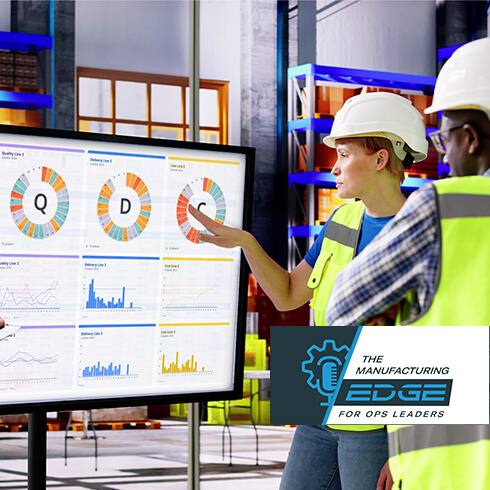
TBM’s Digital Management System powered by iObeya does this with rooms, the digital version of shop floor performance management and the board space you already know. A room holds boards your team recognizes, such as SQDC (safety, quality, delivery, cost), production tracking by PowerHour, and leader standard work by LeaderPro, plug into it.
The common objection is “my people won’t use it.” Some operators swear by pen and paper, and we hear you. The ask isn’t to change how they work. It’s to tap a screen and type a 4 instead of writing a 4 on a sheet. Nearly everyone carries a smartphone, and when our booth visitors picked up a tablet and swiped through PowerHour, the objection faded.
Technology also won’t train people for you. One operations manager told us a previous system failed because new hires were never taught to use the screens. Build training into the routine.
Start Small, and Start Where It Hurts
Not ready to fully digitize your management system? Pick one pain point…for example…
- Are you losing track of production hour to hour? PowerHour is built for hour-by-hour tracking, so you can see production as it happens and act on it, with a digital record that doesn’t get wiped off the board.
- Struggling to get leader routines and follow-up to stick? LeaderPro is built around leader standard work and is designed to create positive habits.
Put them in one digital Obeya room, built for one line. You don’t need dozens of boards, and you don’t need to have mastered 5S or run a Kaizen event first. Crawl, walk, run. The tools give you the first win. The discipline is what keeps it.
A Quick Self-Check
Before your next shift meeting, ask yourself one question: “Where will today’s action items live tomorrow?”
If the answer is a whiteboard, an inbox, or someone’s memory, that’s your starting point.
Want to see how PowerHour and LeaderPro work inside a digital management system? Talk to our team about a demo.