
From the health care sector, where the Baby Boomers are driving demand for more remote medical care, to telecommunications, where companies are installing infrastructure at breakneck speed to support cloud computing and 5G demands, more remote work is being deployed across all industries. The field services market (FSM) overall is on track to more than triple in size to $12 billion by 2033.
Field operations are an entirely different animal when it comes to the breadth of logistics and variables that can come into play. Unless Nostradamus is on your payroll, mistakes will happen. But as we always advise our clients, there is one virtual certainty – if you make the customer and their needs the centerpiece of the entire process, good results will follow. We know this because the vast majority of companies engaged in field operations (94%) say the service experience weighs heavily in future investment decisions. Also, studies show that higher customer satisfaction levels link directly to increased profitability.
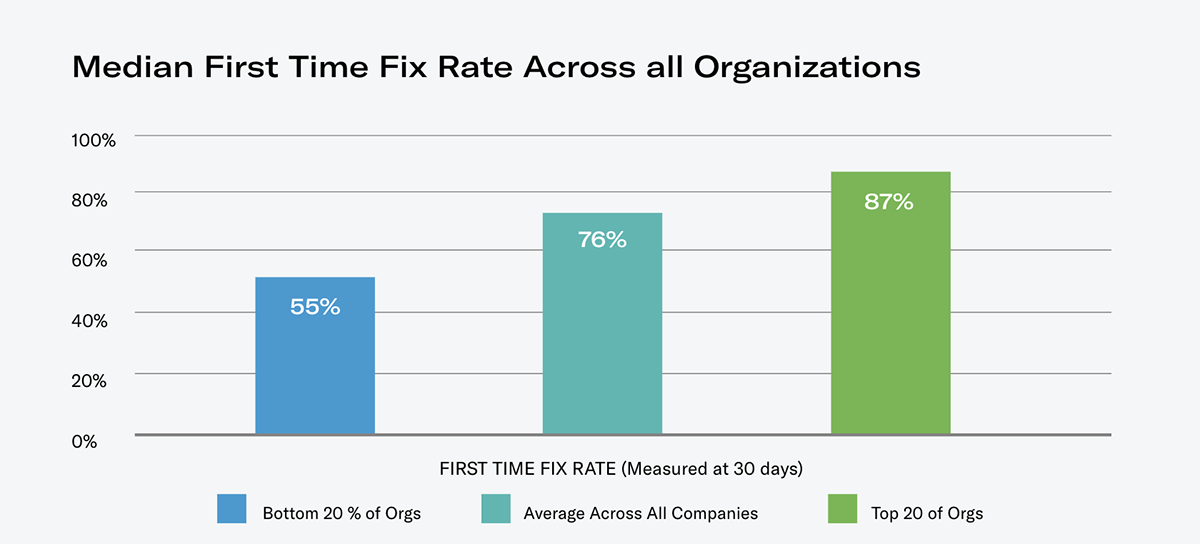
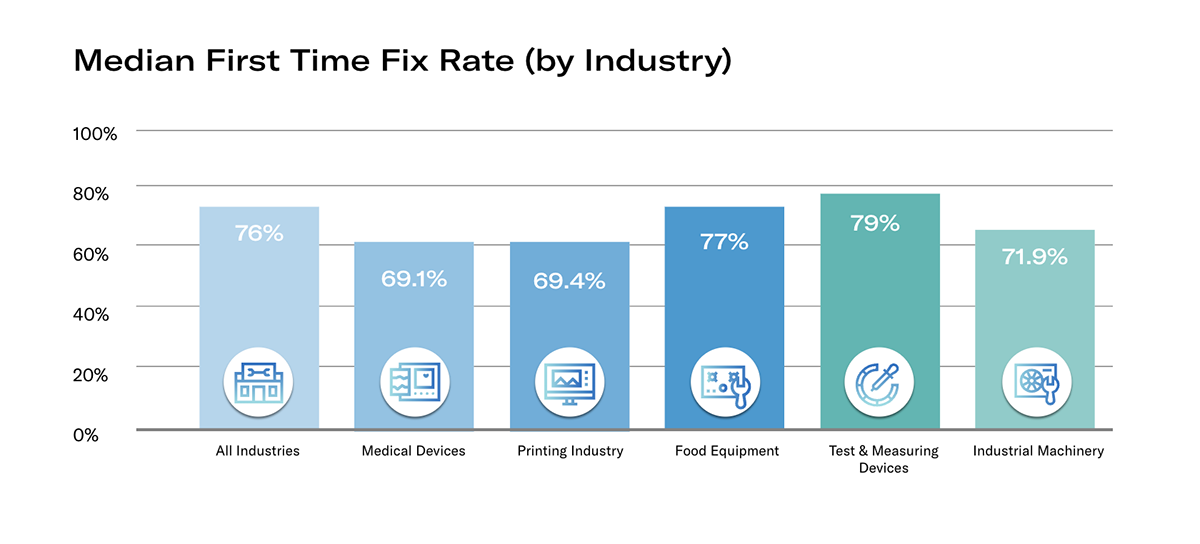
We also know from data that many field service operators have plenty of runway to get better. Using first-time fix rates (FTFRs) as a measure of call quality shows that the median FTFR for all companies is 76%, and that there is a wide swing from the bottom performers (55%) to those that do it best (87%). Within manufacturing, some industries are consistently above median, such as testing and measurement devices (79.8%) and food equipment (77%), while others – including printing (69.4%), medical devices (69.1%), and industrial machinery (72%) are lagging.
 Three-Point Performance Improvement Plan
The good news is that companies committed to improving their call quality have a lot they can do around the edges operationally to cut down on delays and mistakes, and even turn their field operations into significant revenue drivers. Companies often focus on change in three core areas because they directly affect the customer experience and tend to be conducive to value enhancement.
Not every field services process or procedure can or should be standardized. But there are certain areas where tightening workflows can positively impact first-time fix rates, including demand forecasting and capacity planning; scheduling and dispatching; and ongoing performance monitoring and reporting.
Four in every 10 field services teams (40%) experience recurring difficulties or delays due to improperly skilled or outfitted technicians. Some of this stems from human error, as schedulers sometimes send the wrong skillsets or parts to job sites. However, it also reflects uneven commitments from many companies to arm their field technicians with everything they need before arrival, from best-in-class technologies to ongoing education and skills development.
Whether your technicians are working on cell towers in the middle of nowhere, heavy machinery in an urban area, or human beings in homes, they must have ready access to effective troubleshooting sources such as manufacturer’s manuals, and to centralized customer information and parts inventory portals.
In terms of education and development, these areas all too often get pushed to the priority backburner when budgets get tight. But field services managers would benefit from doing the exact opposite and doubling down on investing in these areas. If higher FTFR’s is the goal, keeping your field workers updated and in the know on technologies and best practices is critical, and can be accomplished through online training modules, digital standard work, workshops, and certificate programs.
Becoming a customer-centric organization means stepping into their shoes to better understand the prevailing challenges and opportunities they face. Hence the many surveys and polls we all receive. But across industries, many companies still barge full steam ahead on plans without doing their peripheral research. Making the client the north star in field services means building a 360-degree feedback mechanism – for customers and employees – that better facilitates two-way dialogue and collaboration.
Some effective strategies include:
The opportunities to improve the quality of your service calls are there for the taking, in these three key areas and more broadly. The technologies and solutions are there too and are getting better and better by the minute. And the data shows that higher-quality service calls keep them coming back for more and driving growth. Operational enhancements, done well, will get your company rolling on the road to better service calls, happier customers, and stronger bottom lines.