When vaccines rolled out worldwide, compressed demand surged back all at once. The global supply chain couldn’t respond quickly enough. Manufacturers began facing delays and shortages on everything from raw materials to sub-assemblies, including components that had never posed problems before. Companies panicked, the same way consumers did a few years ago when no one could find toilet paper. Over-purchasing became the norm. And it has made things worse, driving up prices and prolonging widespread shortages.
Now, those shortages are taking a toll on the top line. In many companies, frustrated employees are blaming global circumstances or peers in other departments. But in other organizations, leaders are flipping the script, pointing at processes instead of each other and making changes that make a difference.
Reassess actual demand.
Demand may look like it has gone through the roof. In most cases, however, it has just returned to normal. Of course, real and lasting shifts in behaviors have fundamentally shifted the mix of demand. And both COVID and geopolitical disruption are still in play, adding an element of volatility.Still, the situation has leveled enough for executives to reassess what’s really happening in their businesses and supply chains. Taking the time to understand actual demand, and determine current business requirements to meet it, can position executives to manage supply chains more strategically.
Break the issue into solvable pieces.
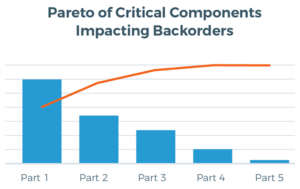
Manufacturers are facing bottlenecks across the business. It is overwhelming, not only to buyers and the strategic sourcing teams, but also to engineering, quality, and production teams who are constantly reacting to changes. Using segmentation and Pareto charts (see Fig 1), you can identify inputs that are the highest priority for meeting immediate production targets.

For example, we find that a handful of components often place the most stress on production. Narrowing your scope to these critical few components, at least in the short term, allows your team to more effectively keep production on schedule. You’ll get what you most need to make revenue goals now, and you can turn attention to other products as resources permit.
We helped an agricultural products company implement such a strategy. The company provides commercial farm equipment delivered in large kits with multiple components. Pre-COVID, it operated with a 98% on-time fulfillment rate for full orders. But over the past 18 months, that percentage has plummeted, sometimes falling to 0%.
Through strategic prioritization, we helped the company go from 0 to 36% full order fulfillment in just three weeks. The organization still has a long way to go to get back to pre-pandemic standards, but the key to moving in the right direction has been to focus on a manageable, solvable part of the problem first.
Gain cross-functional alignment.
For our agricultural client, synchronizing priorities across the business has been just as important as setting them. When you make this kind of adjustment, it’s critical to make sure all business functions are aligned. Remember, production is procurement’s direct customer. It won’t do to shift your buyers’ priorities if the production team is not on board.
Get ahead of potential friction by communicating objectives organization wide. If you are focusing on shortages of a select few components to maximize short-term revenue, share that strategy with internal stakeholders. Also share longer-term plans to keep all parts on track with production once the most critical items are addressed. This way, your teams can work with instead of against each other to meet the needs of customers and your business.
Work in parallel paths
While the immediate goal should be high-priority items that will drive short-term revenue, teams can and should still be thinking ahead. In other words, don’t entirely forget about the items on the back burner.
For example, while buyers are working with key suppliers to secure materials for right now, have conversations about what will be needed three or six months down the road. Planners should also be cognizant of how contracts are organized and how supplier strategy may evolve over the longer term. The goal is to right the ship now while laying the groundwork that will help safeguard against future crises.
Shift supplier relationships from transactional to collaborative
One thing that our agricultural customer found was that sending over a PO and expecting it to be fulfilled isn’t going to work right now. This is true especially if your orders are inflated or if you’re not willing to budge on pricing or terms.
Supplier collaboration was a big part of our customer’s turnaround story, and it needs to be part of your efforts as well. Your buyers must have conversations with suppliers and demonstrate a willingness to be flexible, including placing orders that are more serviceable for the suppliers. Anything you can do to give your suppliers some relief—for example, by spreading out larger orders over longer periods of time—will likely be well received. Communicate that you’re focused on true requirements and immediate needs as opposed to hoarding. You can even encourage your suppliers to have this same conversation with their other customers.
You can be sure that your competitors are facing the same sourcing struggles that you are. Being first to resolve issues will translate into a major advantage. You will improve your ability to meet your customers’ needs while enhancing supplier relationships that will help you stay ahead of future shortages. Plus, you will drive internal efficiencies and reduce conflict between departments. Happier customers, happier suppliers, and happier employees is something all manufacturers can use more of right now. And the impact will show up quickly in both your top and bottom lines, making your executive team happier too.