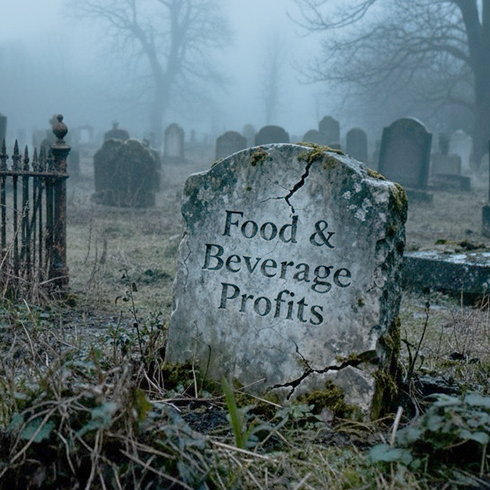
The Process You Have vs. the Process You Think You Have
Most manufacturers think their S&OP process is more mature than it is. The gap between where you think you are and where you actually are is where working capital hides, margin leaks, and strategic plans go to die.
In a previous article, we made the case that S&OP is your strategy execution engine — not a forecasting meeting. If that argument resonated, the natural next question is: where does your process actually sit on the maturity spectrum? And what does it cost you to stay where you are?
At TBM, we’ve assessed S&OP maturity across hundreds of manufacturing and distribution companies. The pattern is consistent: most organizations self-assess at a Level 3 or 4. Diagnostic work typically reveals they’re actually operating at a Level 2. The distance between those two levels is measured in excess inventory, reactive decision-making, and budget misses.
Here’s how we frame the five levels — and what distinguishes them in practice.
| Level | Name | What It Looks Like | Cost of Staying Here |
| 1 | Lack of Process | Ad hoc responses to orders. No forecasting. Multitude of spreadsheets. Functional areas work in silos. | Highest — firefighting is the operating model |
| 2 | Marginal Process | Informal meetings. Disconnected demand and supply plans. One function dominates. | High — alignment is coincidental, not designed |
| 3 | Rudimentary Process | Routine monthly cadence. Spotty attendance. Reconciled demand/supply plans. Standalone systems. | Moderate — decisions made but execution is inconsistent |
| 4 | Classic Process | 100% attendance. Integrated demand/supply planning. Finance linked. Limited external collaboration. | Low — process works but strategy linkage is weak |
| 5 | Ideal / Event-Driven | Dynamic, event-triggered. Full cross-functional integration including customers and suppliers. Automated. | Optimizing — focused on continuous improvement |
What the Gap Actually Costs
The financial stakes of S&OP maturity aren’t abstract. Each level transition has a measurable dollar value attached to it.
A $3 billion household products manufacturer TBM worked with was operating at Level 2: informal cross-functional alignment, inventory decisions driven by intuition, and a planning process that couldn’t keep pace with seasonal demand shifts. The company was carrying 13 weeks of inventory with only three turns per year. By connecting demand signals to production scheduling — a core element of Level 3 advancement — inventory levels dropped 72%, from $1.8 million to $500,000 on the relevant product lines, while turns improved to nearly 11 per year. Fill rate held at 99.3%.
Similarly, a packaging manufacturer managing 39 facilities across North America, had forecast accuracy hovering at 55% — a hallmark of Level 1–2 demand management. Building statistical forecasts tied to promotion and point-of-sale data, and rationalizing SKUs to reduce volatility, drove accuracy above 75% and reduced inventory by $1 million on a single product line while improving case fill rates.
The financial lever isn’t the process upgrade itself — it’s the decision quality that follows. Higher maturity means fewer expedites, fewer schedule changes, less reactive overtime, and inventory positioned to actual demand rather than to a static plan built once a year.
The Most Common Misreads — and Why They Happen
Level 1-2 Gaps: Reacting vs Anticipating
In our experience, the most common maturity misdiagnosis is confusing the presence of a process with the effectiveness of one. Companies at Level 2 often have:
- A monthly S&OP calendar invite
- A supply chain team that owns the process
- Spreadsheets that reconcile demand and supply numbers
- An executive slide deck presented at the monthly meeting
What they don’t have:
- Executive ownership with real decision authority
- Shared metrics across commercial and operational functions
- A closed loop to the annual budget, and
- Outputs that actually reach the shop floor
A multi-brand consumer goods company is a recent example. After growing rapidly through acquisition and consolidating operations, the company found itself managing demand across a more complex network with limited visibility into true end-market demand — including inconsistent signals from major retail partners. The company was reacting to demand rather than anticipating it. That’s a Level 1–2 pattern regardless of what the process looks like on paper. TBM was engaged to diagnose the current state and define a more robust, data-driven demand planning and S&OP approach — precisely because the gap between perceived and actual maturity was creating real operational and financial drag.
Level 4 and 5: Governance and Discipline
The jump from Level 2–3 to Level 4–5 is less about technology and more about governance and discipline. The companies we’ve helped reach Level 4 share a set of commitments that Level 2–3 organizations consistently lack:
- Finance in the room, not downstream. At Level 4, the CFO or finance lead is a core participant in S&OP — not a validator of outputs after the fact. The financial linkage is built into the process, not bolted on.
- Strategy feeds into S&OP, and S&OP feeds back into strategy. The planning cycle and the annual operating plan are explicitly connected. S&OP outputs inform budget assumptions; budget variances trigger S&OP escalations.
- Decisions are the output, not reports. The executive meeting is structured around a small number of pre-defined decision points. Data is reconciled before the room convenes. The agenda doesn’t tolerate SKU-level debate.
- Execution closes the loop. S&OP decisions translate into production schedules, purchasing actions, and commercial moves within a defined time window. If it doesn’t hit the floor, the decision didn’t happen.
Level 5 — the event-driven ideal — is where the process becomes fully dynamic. Meetings are triggered by supply-demand imbalances, not calendar dates. Collaboration extends to key customers and suppliers. Technology is fully integrated rather than interfaced. Most manufacturers don’t need to chase Level 5 immediately; the commercial return on moving from Level 2 to Level 4 is typically where the most value is captured.
How to Know Where You Actually Are
An honest maturity assessment looks at seven dimensions:
- Forecasting process and accuracy — How demand forecasts are built, owned, and measured. Are you using statistical models and market data, or gut feel and last year’s numbers? Accuracy is tracked, trended, and tied to downstream consequences.
- Customer demand signal integration — The degree to which real customer demand — POS data, orders, consumption signals — drives replenishment decisions rather than internally generated forecasts. Higher maturity means the customer’s reality pulls your supply chain, not the other way around.
- Demand segmentation — Whether products, channels, and customers are planned differently based on volume, variability, and strategic importance. A mature process doesn’t treat a high-volume, steady SKU the same way it treats a low-volume, erratic one.
- Planning process governance — The structure, cadence, ownership, and decision rights behind the S&OP cycle. Who runs the meeting, who has authority to act, and whether the process produces decisions or just updates.
- Schedule adherence — How stable the production schedule is within the planning horizon, and whether changes are tracked and driven to root cause. High schedule volatility is a leading indicator of upstream planning failure.
- Leadership engagement — Whether the CEO, COO, and CFO actively use S&OP to make tradeoff decisions, or whether the process is delegated below the level of authority needed to drive cross-functional alignment.
- Systems integration — The degree to which demand, supply, inventory, and financial data flow through connected systems rather than spreadsheets and manual handoffs. Integration determines whether leaders can trust what they’re looking at.
Each dimension has clear behavioral markers at each level — it’s not self-reported, it’s observed.
Understanding where your process sits requires more than a survey. A rigorous S&OP maturity assessment maps the actual flow of demand and supply through your organization, evaluates forecast accuracy trends over time, observes how the S&OP cadence functions in practice, and benchmarks findings against the five-level framework. At TBM, that work typically takes one to two weeks on-site. The output isn’t a maturity score — it’s a prioritized improvement roadmap with financial impact quantified at each step, so leadership knows exactly what closing the gap is worth before committing to it.
The companies that close the gap fastest are the ones that stop defending their current process and start interrogating it. If the assessment says Level 2, that’s not a judgment — it’s a number with a dollar sign attached to it.
The ROI of Moving Up the Curve
S&OP maturity isn’t a destination — it’s a lever. Every level of improvement has a financial counterpart: fewer expedites, better working capital, less schedule volatility, and decisions that are made proactively rather than reactively.
The manufacturers creating the most value from their planning processes aren’t necessarily the ones with the most sophisticated technology. They’re the ones who know exactly where they are on the maturity curve — and have a clear plan to close the gap.
If you’re not sure where your S&OP process sits, that’s the right place to start. TBM’s supply chain team has assessed and rebuilt S&OP processes across manufacturing and distribution for decades. We’ll show you where the gaps are, what they’re costing you, and what a path forward looks like. The conversation starts with an honest diagnostic – complete the short form on the right to speak with an advisor.
In the meantime, read our next article to learn how to use S&OP outputs to stress-test your 2027 revenue assumptions.