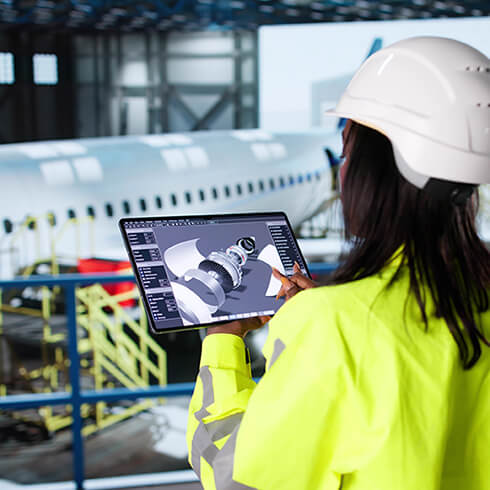
Manufacturers are investing in smart technologies such as AI, IoT, and automation and robotics, tools that help them execute large-scale initiatives such as relocations or plant optimizations.
While the vast majority (90%) use smart technology, seven out of 10 (70%) fail to progress beyond their pilot phase projects and never get to realize their full value.
Executing digital transformations on any scale is hard work. These projects require a strong mix of foresight and accurate planning, consistent communication, and sufficiently trained staff to operate the new equipment. Digitally outfitting new facilities, which more and more firms are doing, requires significant upfront investment for ROIs that will come incrementally. Some firms hit roadblocks early and put their projects on hold, but this is a big mistake. Manufacturers must keep moving due to the pace at which these technologies are advancing. Companies that fall behind risk playing a very difficult game of catch-up.
Optimizing Forces
Smart technologies perform tasks that allow companies to keep their normal day-to-day operations up and running while minimizing disruptions, particularly during relocations. The wait for returns comes gradually but is well worth it. Over time, these technologies can strengthen businesses across the board by:
- Reducing machine downtime by 30-50%
- Increasing throughput 10-30%
- Improving labor productivity by 15-30%
- Allowing for more accurate demand and capacity forecasting
These gains are being driven in large part by the efficiency of AI and IoT sensors, which perform mundane but critical tasks such as predictive maintenance. These tools help companies identify and react to potential equipment failures before stoppages bring unpleasant surprises.
92% of manufacturers believe smart manufacturing will be the main driver for competitiveness over the next three years.
Automation and robotics are also popular for their ability to reduce firms’ dependence on manual labor, which can generate cost savings. More than half of all manufacturers are using some form of automation or robotics systems to optimize productivity and reduce labor expenses.
Last, as a bonus these technologies are also making companies more sustainable. IoT-enabled systems, for example, are allowing more and more firms to reduce energy consumption, increase equipment downtime, and improve resource utilization across their operational footprints.
Seeing is Believing – the Magic of Visual Simulation
One area advancing at warp speed is visual simulation (VS), where new technologies allow companies to visually simulate multiple plans and scenarios, and assess potential outcomes, before any final decisions are made. This ability helps level the playing field for risk-averse middle-market firms by serving as a powerful optimizer as they execute large-scale initiatives.
Seeing costly risks or mistakes before they happen, particularly during relocations, can be invaluable for firms navigating the hornet’s nest of complexities. Many factors must be weighed, including cost pressures, reshoring options, proximity to essential suppliers and markets, and the resiliency of supply chains, which will no doubt be stress tested as the tariffs take hold.
The adoption of VS systems is on the rise as more companies realize that, like a good carpenter, they provide more opportunities to measure twice and “cut” once. A decade ago, only a select few were using these tools due mainly to cost and the lack available technical skill. Fast forward to today, and more than a quarter of manufacturers have VS technologies in their sights. Over the next 24 months, 41% plan to prioritize automation, 34% will focus on AI and sensors, and 28% will focus on VS systems.
Building a Digital Twin – How Visual Simulation Tools Work
These tools essentially build digital twins of each company’s ideal future state, and then visually lay that over its current state, allowing them to poke, prod, and test different scenarios and situations before they make any official changes. Solutions made by companies such as Simul8, for example, start by taking a detailed snapshot of the current state to use as the baseline. Then, guided by various inputs, visual technology overlays the two. In our experience, this is where the “a-ha” moments come as the tools allow companies to see bottlenecks or potential delays before they happen, with zero interruption to ongoing operations.
As more companies use these tools, they are discovering the many benefits they can deliver, including their ability to serve as powerful optimizing agents for everything from equipment management to relocations to process optimization to training and development.
Visual Simulation Tools
Equipment and Maintenance.
Prior to any major installations, these technologies let companies simulate performance and interoperability with existing systems and allow for control logic such as PLCs to be tested in a virtual environment. This can result in shorter commissioning times, lower implementation costs, and fewer errors. In terms of regular maintenance, they also help monitor wear, predict breakdowns, and optimize schedules.
Plant Relocations.
Relocations are picking up, in part spurred by the tariffs, but more so because companies are aggressively searching for ways to optimize their operations from within. Most are seeking to right-size a particular aspect of their operation – for example, streamlining duplicate work occurring at separate sites to save costs. According to the Kaizen Institute, 90% of North American manufacturers have relocated manufacturing operations in the past five years—highlighting the critical role of digital tools in streamlining post-relocation efficiency.
Process Optimization
Simulation tools enable companies to digitally model and analyze their current workflows, identify inefficiencies, and test improvements in a risk-free virtual environment. Whether you’re embarking on a plant relocation or a plant optimization effort, by creating digital twins of operations, firms can visualize the impact of changes—such as layout adjustments, staffing shifts, or equipment upgrades—before implementation. This leads to more informed decision-making, reduced trial-and-error on the shop floor, and sustained gains in productivity, safety, and ergonomics.
As an example, if a company knows it will be short on manpower on a certain day each month and may only two machines instead of the normal five, firms can see the impact on output immediately and make any necessary adjustments in advance. These tools also help optimize and track inventory and model picking routes and can simulate peak demand scenarios.
Training & Development.
Beyond their operational value, VS technologies can help companies with another challenge many have – providing realistic environments for training workers, again without disruption. VS tools can be effective as they provide immediate feedback, allow for faster onboarding, and improve overall safety and compliance.
We are in an environment in which more and more firms are prioritizing their use of technology, and this focus will continue for some time. But the work doesn’t end once the tools and technologies are up and running. Continuous improvement is essential in this regard given the rapid development pace of technology. Some are utilizing time and motion analysis software tools available from companies such as AVIX to do just that. For example, we recently worked with a company to videotape the entire process flow at one of its warehouses, from picking to packing to shipping. This provides a tremendous amount of useful data that can help improve productivity, space utilization, and areas or steps in the flow process where companies need to focus more on improving safety and ergonomics.
Don’t Let Perfect Be the Enemy of Good
Manufacturers are under extreme pressure to enhance efficiency and be nimbler and more adaptable, and we have heard from many who want to get better, which is a major positive. But it is important not to let the perfect get in the way of the good in this case. Given the pace at which these technologies are evolving, companies cannot afford to hit the pause button when challenges come, or to wait until they get everything perfect before proceeding. Time, and smart technologies, wait for no one. Those firms that can stay patient and on track with their smart technology goals will ultimately be pleased with their ROIs and will make themselves stronger in more ways than one.
Download the Article →