Family-owned manufacturer of drainage pipe

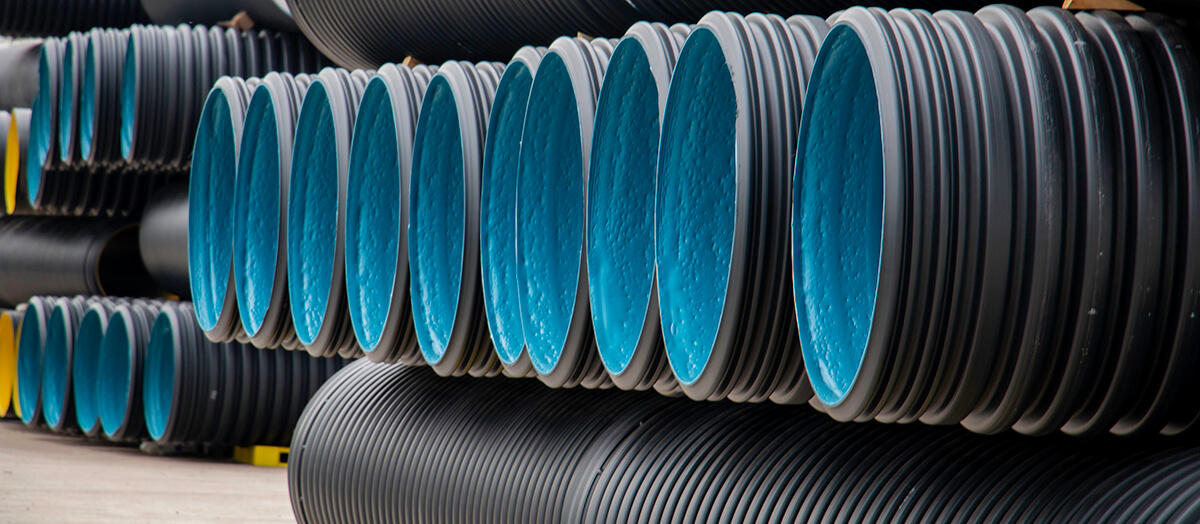
A family owned industrial manufacturer of large underground drainage pipe operates multiple facilities across the U.S. and runs its flagship plant 24/7 to meet strong market demand. Despite being fully sold out, the company struggled with operational efficiency resulting in: decline in output due to low OEE, inefficient changeover time, high scrap rates, and a reactive, firefighting driven culture. With labor and overtime already maxed out, leadership faced a critical decision: invest in new equipment or unlock capacity from existing assets. The company needed a disciplined operating system—one that could make performance visible, reduce variability, strengthen execution, and sustain improvement without additional capital investment.
Despite strong customer demand and a fully sold out production schedule, the organization was unable to increase output. Operating 24/7 eliminated labor and overtime as viable levers, forcing leadership to confront a critical question: invest in new equipment or unlock capacity from existing assets.
Performance data pointed to systemic issues rather than equipment limitations were consuming valuable capacity every month:
Compounding the problem was the absence of an effective management system to drive operational efficiency. Leaders and operators were locked in a reactive, firefighting mode—driven by tribal knowledge, informal escalations, and inconsistent performance measurement—leaving little opportunity for sustained improvement or confident capital decision making.
TBM began with a focused operational diagnostic to identify the root causes of capacity loss and determine whether existing assets could deliver the required ROI without new capital investment. The analysis revealed systemic issues:
In response, TBM recommended and worked with the client’ team to implement:
Together, these changes replaced firefighting with execution discipline—unlocking hidden capacity and creating a foundation for sustained performance improvement.
Over a three month implementation period, TBM helped the organization achieve meaningful, durable improvements across OEE, scrap reduction, throughput, and financial performance—proving the changes were systemic, not short term interventions.
In total, the engagement generated $743K to $1.7M in benefits within the initial three months, delivering a compelling return without new capital investment. Just as importantly, the success of the work led to expanded scope, including inventory management and broader management system deployment across additional facilities—extending impact beyond the original engagement.
The work did more than improve metrics. It shifted the organization from reactive firefighting to proactive execution—creating a more capable operating system where leaders lead, operators solve problems, and the business can confidently grow into demand.
At a Glance
Client
Results
